

Weather data expert witnesses offer specialized knowledge that is critical for legal disputes involving atmospheric or meteorological evidence. No significant new insights have emerged beyond established content trends in this domain.
This article provides a comprehensive guide to the qualifications, responsibilities, and impact of weather data expert witnesses on litigation. Capital Expert Services connects legal teams to thoroughly vetted professionals to ensure strong, defensible support for weather-related cases.
Key Takeaways
- Weather data expert witnesses analyze and explain meteorological evidence in court
- These experts are vital across industries, including insurance and transportation
- Primary data sources include NOAA archives and Doppler radar
- Rigorous validation ensures data reliability in legal settings
- Properly selected experts enhance case strategy and credibility
Understanding the Role of a Weather Data Expert Witness
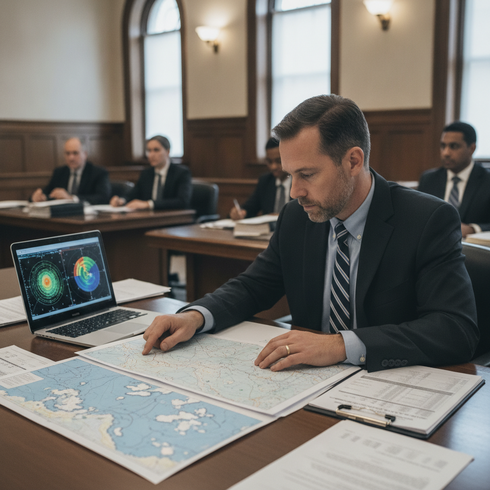
Legal cases involving meteorological evidence require expert testimony from professionals who can interpret complex weather data. Weather data expert witnesses bridge the gap between scientific analysis and courtroom clarity, ensuring that legal teams and courts understand the relevance of atmospheric events to litigation.
What does a weather data expert witness do?
Weather data expert witnesses apply advanced meteorological analysis to incidents relevant in legal disputes. Their primary function is to interpret, reconstruct, and present weather data in a form that attorneys and judges can use. Weather data expert witnesses often collaborate with other specialists, such as those focusing exclusively on broader meteorological analysis. For a deeper understanding of how overlapping expertise areas support litigation, see our dedicated resource on the meteorology expert witness role.
In which types of cases are weather data expert witnesses essential?
Expert input on weather evidence is essential in cases involving property damage, insurance claims, transportation incidents, workplace accidents, and environmental disputes. Courts rely on these specialists to determine causation, liability, and legislative compliance where weather conditions are in question.
What qualifications and experience should a weather data expert have?
Courts assess an expert’s credibility based on academic credentials, relevant certifications such as those from the American Meteorological Society, hands-on case experience, and a proven record of providing clear, unbiased testimony under cross-examination.
Types of Weather Data Analyzed in Legal Disputes
Comprehensive weather data analysis is grounded in the use of multiple scientific sources and platforms. Experts draw upon official datasets and advanced tools to support legal conclusions with defensible, validated evidence.
What are the primary sources of weather data for expert testimony?
Weather data experts typically rely on sources such as National Weather Service records, Doppler radar archives, NOAA digital datasets, local weather station logs, and satellite imagery. These resources enable them to build detailed, historic, and site-specific reconstructions of events in question.
How is weather data authenticated and validated in litigation?
Validation methods ensure evidence meets standards for admissibility in court. These include careful verification of data sources, cross-referencing multiple datasets, reproducing analytical methodologies, and documenting all steps taken to establish the chain of custody and scientific fidelity.
Which analytical tools and platforms are most commonly employed?
Weather data experts often use a suite of digital tools to process and visualize information. Commonly utilized platforms include NOAA archives, forensic meteorology analysis software, and GIS mapping systems. According to a 2024 report from the Institute of Forensic Science, the use of dedicated meteorology tools in litigation support increased by 27% over the prior two years.
The Value of Weather Data Experts in Different Industries
Weather data expertise extends across many sectors, adapting to distinct evidentiary and regulatory requirements. The following sections outline how such expertise may be engaged to resolve industry-specific challenges.
How do insurance and property cases leverage weather data expertise?
Insurance and property claims often hinge on objective analysis of weather conditions at the time of a claimed event. Weather data experts:
- Analyze if weather events, such as storms or floods, caused the reported damage
- Assess the validity of force majeure claims
- Determine if meteorological conditions contributed to liability in coverage disputes

When is weather data testimony relevant in transportation and maritime disputes?
In transportation and maritime law, accurate weather reconstruction can determine fault or exonerate parties. For example, in roadway and aviation accidents, experts assess wind, visibility, and precipitation impacts. In shipping or boating incidents, expert witnesses analyze sea-state, wind patterns, and forecasts relevant to safe navigation.
In what ways do weather data experts contribute to environmental and energy litigation?
Environmental and energy disputes often require meteorological input to evaluate compliance, pollution dispersion, and the effect of weather on operational safety. These experts are brought in to quantify how weather influenced emissions, spills, or reliability of energy grids during major events.
How to Select and Prepare a Weather Data Expert Witness
Securing the right weather expert for a dispute requires careful evaluation of credentials and communication abilities. Preparation and collaboration between the legal team and the expert are critical for case success.
What criteria are essential when evaluating potential weather data expert witnesses?
Assessing an expert begins with a review of formal education, active membership in professional meteorological societies, certifications, and prior experience testifying in relevant case types. Attorneys benefit from verifying past performance and peer recognition.
What are best practices for integrating a weather expert’s findings into your legal team?
Smart integration of expert findings minimizes risks of miscommunication and maximizes credibility before courts. Attorneys and experts should:
- Establish early and clear lines of communication on case objectives
- Collaborate closely to tailor the scope of analysis to the legal issues in dispute
- Coordinate the development of demonstrative graphics or models to aid court understanding
Key factors to remember when briefing a weather data expert
Selecting and preparing the right expert involves attention to detail. Attorneys should:
- Verify the expert’s education, certifications, and licensure
- Request and review sample reports or prior testimony
- Ensure the expert can communicate technical details clearly to a lay audience
- Confirm familiarity with jurisdictional evidentiary standards
Emerging Trends and Future Outlook for Weather Data Expertise
Technological and regulatory shifts are reshaping how weather data is analyzed and used in courtrooms. Recent advances point toward continued growth in both demand and sophistication of expert contributions.
How are technological advancements transforming weather data analysis in court?
AI, machine learning, and new visualization tools are making weather event reconstruction more precise and comprehensible. These advancements enable experts to explain complex phenomena clearly to judges and juries. According to a 2024 study from the Center for Legal Technology, AI-powered forensic tools now support 40% of expert-led weather analyses presented in court.
What future impacts may regulatory changes or climate developments have on litigation?
As climate variability increases, regulatory bodies are mandating more stringent data analysis in certain industries and jurisdictions. The anticipated rise in extreme weather events is expected to increase reliance on expert witnesses for causation and liability. A 2025 legal technology survey published by LawTech Analytics forecasts a 30% rise in demand for weather data testimony as courts adapt to changing litigation patterns.
Conclusion
Weather data expert witnesses deliver scientifically-sound analysis that strengthens legal cases involving atmospheric events. Their rigorous methods, reliance on validated sources, and industry adaptability underpin the credibility of their testimony. Capital Expert Services can connect you to vetted weather data expertise when your litigation requires clear answers grounded in meteorology.
Frequently Asked Questions
What’s the difference between a weather data expert witness and a meteorologist?
A weather data expert witness applies scientific understanding to legal matters and is qualified to testify in court, focusing on evidentiary standards. Meteorologists typically perform research or forecasting and may not have experience with legal proceedings or testimony.
How far back can historical weather data be retrieved for legal purposes?
Weather data experts can access archives from agencies like the National Weather Service and NOAA, often retrieving reliable records going back 50 years or more. This ability enables analysis of historical meteorological conditions relevant to older legal disputes.
Can weather data expert witnesses provide opinions on causation?
Yes, these experts routinely opine on whether specific weather conditions caused or contributed to incidents in question, provided their conclusions are grounded in recognized scientific methodology.
Are there common mistakes attorneys make when using weather data in court?
Attorneys sometimes select under-qualified experts or fail to translate scientific evidence effectively for juries, impacting the value and clarity of weather data presented in court.
How can I find a qualified weather data expert witness for my case?
Consulting firms such as Capital Expert Services maintain databases of extensively vetted experts who meet rigorous standards for courtroom testimony and specialized weather data analysis.
Weather data expert witnesses support litigation with precise analysis, data validation, and credible courtroom presence. Their input is essential for property, insurance, transportation, and environmental cases. Choosing the right expert early ensures robust, reliable outcomes, and Capital Expert Services offers access to the expertise needed for sound legal strategy.