
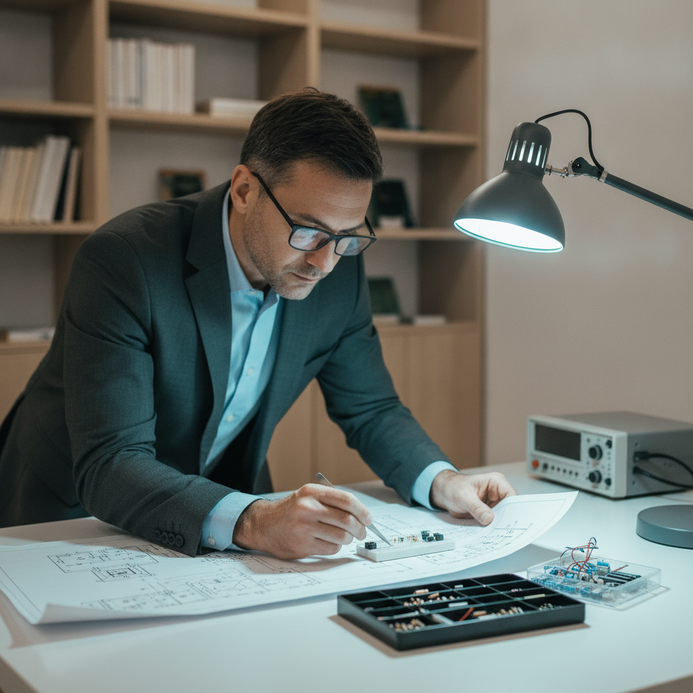
Electrical engineering patent expert witnesses play a pivotal role in intellectual property litigation by simplifying technical issues and supporting legal arguments. While there are no notable hidden trends, their expertise remains critical where technology and law intersect.
This article outlines the core responsibilities, required qualifications, and proven methodologies relied upon by these experts. Readers will also discover how Capital Expert Services connects clients to leading specialists, ensuring robust support for patent disputes.
Key Takeaways
- Electrical engineering patent expert witnesses clarify complex technical evidence in litigation
- Top experts combine technical degrees, litigation experience, and strong communication skills
- Proper methodology and peer-reviewed standards are essential for admissibility
- Industry demand for these expert witnesses is highest in sectors such as electronics and communications
- Early and systematic expert engagement strengthens IP litigation outcomes
Understanding the Role of an Electrical Engineering Patent Expert Witness
Electrical engineering patent expert witnesses help courts and legal teams understand patent claims surrounding intricate electronics and systems. Their role is essential in translating technical details into clear, accessible terms for judges and juries deciding complex disputes.

What does an electrical engineering patent expert witness do?
An electrical engineering patent expert witness provides opinions on infringement, validity, and the interpretation of patent language related to electrical inventions. The expert deciphers highly technical matters for the court and offers fact-based testimony to help resolve disputes involving advanced technology.
How are electrical engineering experts engaged in legal disputes?
Such experts are retained when technical clarity is needed in patent litigation, often during cases involving allegations of infringement or challenges to patent validity. These cases frequently center on intricate elements of circuitry, digital communications, or hardware design, where laypersons lack sufficient understanding.
What real-world skills are essential for effectiveness as an expert witness?
Credible experts demonstrate not only deep technical knowledge, but also courtroom communication skills, analytical rigor, and the ability to produce clear and defensible expert reports. Experience in testifying under cross-examination further strengthens credibility, as does expertise in technical writing and peer communication.
Which platforms and tools support the expert witness process?
Resources such as IEEE Xplore give access to cutting-edge technical literature, while specialized patent analytics software enables efficient review of patent landscapes. Technical modeling platforms like MATLAB and CAD software allow experts to visualize and communicate complex systems effectively to legal teams and courts.
Evaluating Qualifications and Selection Criteria
Choosing the right electrical engineering patent expert witness is foundational for legal strategy and case outcome. Legal teams benefit from understanding what qualifications and indicators of reliability to look for in potential experts.
How do you assess the technical background of an expert witness?
The best expert witnesses typically possess advanced academic qualifications such as a doctorate or master’s degree in electrical engineering. Additional credentials include peer-reviewed publications and leadership roles in industry or academia, indicating deep, current expertise.
What experience is vital for credibility in the courtroom?
Substantial experience in either previous patent litigation or relevant industry sectors is highly valuable. Experts who have provided sworn testimony and contributed to successful case outcomes offer a proven track record. Both domain knowledge and familiarity with the legal environment build authority in high-stakes cases.
What makes methodology defensible and reliable?
A defensible methodology is rooted in established engineering principles, peer-reviewed standards, and transparent, reproducible approaches. According to a 2024 IEEE Law & Technology review, courts lend greater weight to expert opinions that align with accepted professional practices and allow for independent verification.
Key qualifications and red flags to consider
Evaluating and selecting a patent expert requires attention to several key factors that support successful testimony:
- Evidence of a doctorate or advanced degree in electrical engineering or related field
- Documented prior testimony in patent, technology, or similar litigation
- No history of disqualification for bias or unreliability in court proceedings
- Demonstrated ability to communicate clearly—both orally and in writing
Methodologies and Best Practices in Patent Disputes
A systematic, rigorous approach distinguishes credible expert testimony from unsupported opinions. Best practices focus on transparency, reproducibility, and adherence to industry norms during the litigation process.
What investigative steps are standard in patent cases?
Experts start by reviewing patent claims, specifications, and the accused device or process. They compare technical documentation, conduct claim construction analyses, and assess potential prior art that may affect validity or infringement decisions.
How is evidence presented to be most persuasive in court?
Persuasive expert reports employ clear language and well-structured arguments, often supported by diagrams, models, and data visualizations. Effective communication translates complex electrical concepts into accessible explanations for judges and juries without specialized backgrounds.
Why are peer-reviewed standards and reproducibility important?
Adherence to peer-reviewed best practices and industry standards boosts the reliability of expert opinions and their admissibility in court. According to a 2023 USPTO study, testimony that can be recreated and validated by other professionals generally withstands the most scrutiny and is more influential on legal outcomes.
Typical reporting formats and documentation approaches
Preparation of expert documentation is crucial for successful patent litigation. Experts rely on detailed written reports with references, technical illustrations, and transparent appendices. Visual demonstration tools like MATLAB models and CAD diagrams aid in explaining technical points and strengthening testimony.
Industry Applications for Electrical Engineering Patent Experts
Electrical engineering patent experts serve a vital role across sectors with rapid technological change and frequent patent disputes. Their skills are often sought in litigation involving advanced electronics, energy, and automations systems.
Integrated circuit and semiconductor innovation frequently underpins disputes in the electronics industry, where expert insights are essential for clarifying patent scope and technical differences. For a deeper look at how specialized knowledge translates across complex fields, see our discussion on crossover into semiconductor disputes.
Which industries most often require these experts?
Patent disputes in consumer electronics, telecommunications, power systems, medical devices, industrial automation, and automotive technology often benefit from electrical engineering expertise. These fields involve technologies with overlapping patent claims and rapidly evolving standards, requiring expert interpretation.
What kinds of patents often lead to disputes involving electrical engineering?
Patents related to integrated circuits, wireless communication protocols, embedded systems, renewable energy technologies, and robotics commonly become the focus of litigation. Innovations in these areas often involve subtle technical distinctions best explained by electrical engineering specialists.
How do electrical engineering experts collaborate with legal teams?
Collaboration begins early, with experts advising on claim construction, discovery, and case strategy. Experts contribute to technical tutorials, prepare testimony, and provide analyses for settlement negotiations, ensuring that legal arguments are robust and grounded in technical reality.
Common types of cases handled by electrical engineering patent experts
Electrical engineering patent experts support many types of high-stakes litigation. The following are representative scenarios:
- Infringement disputes involving integrated circuits and microprocessors
- Litigation over wireless communication protocols
- Patent validity challenges in renewable energy systems
- Cross-licensing and standards-essential patent disagreements
Actionable Frameworks for Selecting and Using Patent Experts
A systematic approach to expert selection and engagement reduces risk and maximizes the effectiveness of the expert’s contributions to litigation. Having a clearly defined process is vital for consistent success.
What frameworks can guide the selection of an expert witness?
Structured frameworks involve mapping technical requirements to case-specific needs and evaluating candidate qualifications, availability, and independence. Tools like online expert networks streamline initial searches, while in-depth vetting reviews litigation history and potential conflicts of interest.

Which common pitfalls should firms avoid when engaging experts?
Failing to adequately vet credentials or overlooking conflicts of interest can lead to disqualification or reduced credibility. Relying on experts with limited courtroom experience or prior bias findings may compromise the legal team’s position. Seeking early and thorough engagement mitigates these risks.
Steps to ensure successful expert engagement
Successful retention follows a set of best practices that help ensure the right fit and smooth coordination throughout the case:
- Early consultation to clarify technical issues and case scope
- Comprehensive vetting of credentials and litigation history
- Engaging the expert in discovery and strategy sessions
- Coordinated preparation for deposition and trial testimony
Conclusion
Selecting the most qualified electrical engineering patent expert witness is critical for building a powerful legal strategy. By evaluating qualifications, proven methodologies, and understanding sector-specific applications, legal teams are better equipped to navigate patent disputes. For specialized support, Capital Expert Services provides connections to leading experts and tailored case solutions.
Frequently Asked Questions
What is the difference between a fact witness and an expert witness in patent litigation?
A fact witness speaks only about events or documents from direct knowledge, while an expert witness is retained to offer technical or scientific opinions that help clarify complex issues for the court. Electrical engineering patent cases nearly always depend on expert opinions for clarity.
Can an expert witness assist in both invalidity and infringement cases?
Yes, electrical engineering patent expert witnesses are routinely hired to offer opinions in both invalidity and infringement disputes. Their role includes analyzing claim interpretations and comparing technical specifications, regardless of party alignment.
How early should a legal team engage an electrical engineering patent expert?
Engaging an expert at the earliest stages of a patent dispute, sometimes even before filing, ensures more accurate claim analyses and stronger overall strategy. Early input helps anticipate challenges and shape discovery.
In what ways can an electrical engineering expert add value outside the courtroom?
Outside of testimony, electrical engineering experts assist with claim construction, technical presentations during litigation, and providing neutral advisory opinions that can facilitate settlements or narrow disputes.
How do you verify the impartiality of a potential expert witness?
Due diligence includes reviewing the expert’s litigation history for disqualifications, assessing for potential conflicts of interest, and evaluating previous testimony for signs of bias. These steps ensure reliability and admissibility in future court proceedings.
When navigating technical patent disputes, electrical engineering patent expert witnesses are essential for effective communication of complex technology, adherence to industry standards, and overall case success. The expertise offered by Capital Expert Services ensures legal teams access highly qualified professionals with experience in both technical and legal arenas.