
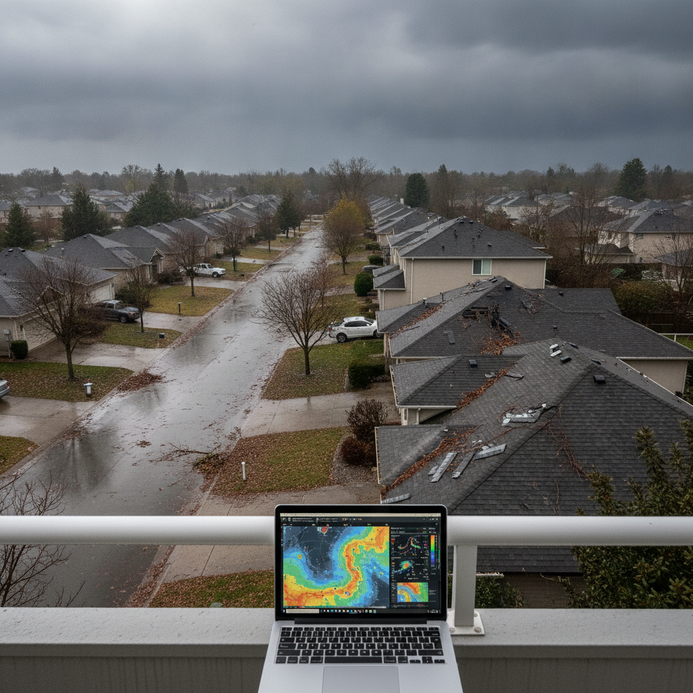
Understanding how to predict storm damage is crucial for minimizing the impact of severe wind events. Leading competitor research highlights the importance of combining scientific modeling with real-world case analysis to capture both predictive techniques and their practical application.
This article explains the science and methodologies underlying wind damage prediction and assessment. Readers will learn about storm mechanics, advanced tools, real-world workflows, and key limitations. Capital Expert Services brings expertise in translating these insights into defensible actions for legal, business, and community preparedness.
Key Takeaways
- Wind damage prediction involves understanding both storm types and structural vulnerabilities
- Downbursts, straight-line winds, and gustnadoes are major contributors to wind damage
- Prediction methods use models, GIS platforms, radar, and machine learning
- Data quality, methodology, and local factors shape damage assessment accuracy
- Community preparedness requires practical workflows integrating prediction and mitigation
Introduction to Wind Damage Prediction
Effective wind damage prediction requires knowledge of atmospheric processes, event classifications, and the interplay with physical infrastructure. This section outlines key storm types, vulnerabilities, and the scientific complexities that underpin reliable forecasting.
What are the fundamental types of severe wind events?
Severe wind events are broadly categorized by their mechanisms and impacts. Downbursts occur when rain-cooled air descends rapidly from a thunderstorm, striking the ground and spreading outward. Straight-line winds, often mistaken for tornadoes, result from strong thunderstorm outflows and can topple trees and power lines over wide areas. Gustnadoes are small, short-lived whirlwinds forming along gust fronts, capable of causing localized but intense damage. Each of these phenomena presents distinct challenges for prediction due to their variable scales and sudden onset.
How does wind impact structural vulnerabilities?
The effect of wind on structures depends on design, materials, and geographic factors. Buildings with unreinforced masonry, older construction standards, or improper anchoring face higher risks from severe winds. Locations exposed to open terrains, such as flat plains or coastal regions, are particularly susceptible. Differences in building orientation, proximity to trees, and landscape features further influence the level of storm damage experienced.
Why is wind production and forecasting scientifically challenging?
Forecasting wind production is complicated by the dynamic nature of atmospheric systems and the influence of localized turbulence. Meteorologists must consider a mix of broad-scale weather models and microscale interactions that create unpredictable wind patterns. Reliable storm damage prediction often requires expert analysis to evaluate meteorological data, model selection, and interpret complex wind dynamics. When legal clarity is needed or technical opinions are required for proceedings, a meteorology expert witness can provide valuable support for cases involving wind or storm-related disputes.
Wind Damage Prediction: Models, Methods, and Tools
Innovative prediction systems now integrate legacy data, analytical techniques, and real-time digital platforms. This section explores model types, input data, and evolving machine learning to illustrate how to predict storm damage and continually improve forecast reliability.
How do wind prediction models and forecasting tools estimate damage?
Wind damage prediction models combine meteorological data with structural analysis to estimate losses. Commonly used tools include:
- Damage Functions: Translate wind speed estimates into expected structural impacts.
- GIS Mapping Platforms: Visualize areas of wind risk and overlay critical infrastructure.
- Radar Detection Systems: Identify severe wind features within thunderstorms to issue early warnings.
- Surface Observation Networks: Capture real-time wind speeds from weather stations, refining model inputs.
Each tool enhances situational awareness for both forecasters and emergency response coordinators by supporting rapid decision-making.
What are the key data sources and analytical techniques?
Improvement in wind damage prediction accuracy relies on integrating diverse data sources. Weather radar, satellite imagery, ground-based observations, and historical event databases are core inputs. Analytical techniques include probabilistic modeling, threshold analysis for wind speeds, and combining physical vulnerability data from local building inventories. Processed via automated pipelines or platforms like ArcGIS, these inputs increase the robustness of prediction workflows.
How do machine learning and data-driven modeling improve results?
Machine learning models analyze large meteorological datasets to recognize patterns leading to severe wind outcomes. By identifying geographic and temporal correlations, these algorithms enhance short-term and spatially specific forecasts. According to a 2024 NOAA study on machine learning in wind damage prediction, artificial intelligence substantially improved accuracy in estimating damage zones during rapidly evolving storm outbreaks.
What are the advantages and limitations of current forecasting tools?
Current wind prediction tools deliver improved lead times, actionable warnings, and detailed visualization of risk. However, uncertain event parameters, incomplete reporting, and inherent model approximations restrict precision. Advancements are in development, such as real-time integration of drone and IoT sensor data, aiming for finer-scale prediction of both structural damage and cascading economic impacts.
Damage Assessment, Reporting, and Real-World Applications
Assessment and post-event reporting are vital for quantifying storm impacts and turning predictions into actionable outcomes. The following subsections cover methodologies, case studies, and practical workflows relevant to local agencies and businesses.
How are wind damage assessments conducted and reported?
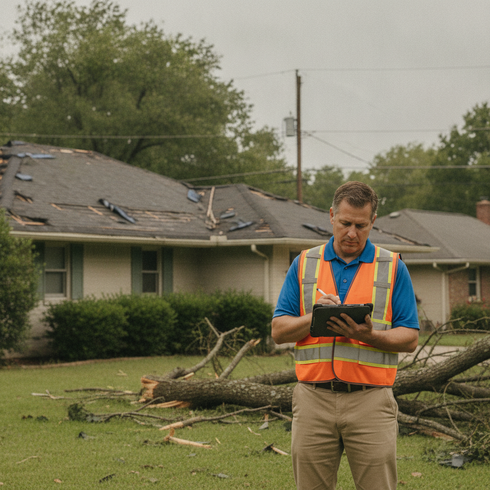
Wind damage assessments use standardized protocols, including initial photographic evidence, on-site structural inspections, and geospatial databases. Professionals document the severity and scope of impacts, comparing observed damage to model-based predictions. Reporting frameworks consider not only physical losses but also utility disruptions, business interruptions, and safety concerns.
What case studies and lessons from past events inform prediction?
Lessons from recent severe wind events have prompted refinements in both model calibration and emergency response. According to a 2023 Texas A&M review of storm damage assessments, integrating field data with pre-established risk maps led to measurable improvements in response strategies and damage estimation consistency.
Which practical tools support local governments and communities?
Implementing wind damage prediction and mitigation relies on an actionable, step-by-step workflow for municipalities. These steps include initial risk assessment, tool selection, predictive modeling, and use of mitigation measures aligned with local needs. Engagement with stakeholders is critical for tailored response planning and public communication during severe storm threats.
Key Tools and Models for Predicting and Assessing Storm Damage
Multiple established and emerging solutions support prediction and assessment workflows for municipalities and consulting teams:
- GIS and mapping platforms for detailed risk visualization and planning
- Real-time radar detection systems issuing rapid alerts for severe winds
- Surface observations from local weather station networks
- Centralized wind damage reporting databases for data validation
- Integrated early warning systems deployed at the community or organizational level
- Machine learning-based forecasting applications that refine local predictions using historic and real-time data
Limitations, Challenges, and Future Directions
While wind damage prediction has become more sophisticated, obstacles remain. Data paucity, model uncertainty, and integration barriers limit the ambition of current systems. This section addresses the most persistent hurdles and explores pathways for future advancements.
What are the main data and model limitations?
Prediction is restricted by uneven data coverage, simplified model assumptions, and reporting variability. Gaps in real-time wind measurements, inconsistencies in historical data, and missing information about local construction practices hinder model performance. As a result, current wind damage models may under- or over-predict actual losses, especially for rare or unusual event types.
How can future research address current gaps in storm damage prediction?
Emerging research is focused on fusing heterogeneous data, expanding high-resolution observations, and improving physical vulnerability datasets. Partnerships between national weather services, insurance sectors, and academic consortia have the potential to raise forecasting standards and deliver more consistent updates to predictive algorithms.
Opportunities for Improving Prediction and Mitigation
Several strategies offer promise for enhancing how do you predict wind damage from severe storms:
- Expanding smart sensor and IoT network coverage to fill data gaps at the local level
- Combining empirical event data with analytical wind modeling for multi-disciplinary insight
- Enhancing community outreach, including educational materials and public drills
- Integrating advanced prediction outputs directly with municipal emergency response plans for timely action
Frequently Asked Questions
How do prediction models handle rare or extreme storm events?
Most wind damage prediction models use historical frequencies and typical event profiles as their inputs, meaning rare or unprecedented storms can be underestimated. Researchers are developing techniques to better represent outlier events and ensure emergency responses are robust to previously unseen scenarios.
What role does machine learning play in wind damage forecasting?
Machine learning algorithms process large volumes of historical and real-time weather data, identifying subtle relationships that improve both timing and location accuracy in wind damage forecasts. The synergy of machine learning with radar and ground-based observation networks strengthens early warning systems.

Can wind damage prediction tools support legal or insurance claims?
Yes, comprehensive prediction tools and standardized damage assessments provide robust evidence to document losses in litigation or insurance contexts. These tools help establish causality, quantify losses, and inform settlement or trial outcomes.
How does GIS mapping help communities plan for storm risks?
GIS mapping highlights areas at heightened risk for wind damage by integrating hazard, exposure, and vulnerability data. Municipalities use these risk layers to prioritize mitigation, inform zoning rules, and strengthen the resilience of critical infrastructure.
What factors most frequently influence wind damage risk assessments?
Key influences include the expected wind speed, storm event type, age and design of buildings, proximity to natural barriers or open terrain, and historical storm frequency. Adjusting for these variables allows for more tailored and defensible risk assessments.
Effectively predicting storm damage requires mastery of event science, modeling, and local application. Combining robust data collection with evolving tools such as GIS mapping and machine learning improves wind damage prediction and assessment accuracy. Case studies and real-world applications offer practical guidance for defense of claims, community planning, and organizational readiness. Capital Expert Services delivers authoritative expertise to transform prediction into actionable strategy for clients facing severe weather risks.