

Insurance weather error refers to mistakes or misinterpretations involving weather event data that disrupt insurance processes and claim outcomes. With no new hidden insights beyond current content trends identified, awareness of established challenges remains crucial.
This article delivers a practical guide for insurance professionals and claimants. Readers will learn the importance, types, and management of insurance weather error, supported by actionable advice and industry highlights. Capital Expert Services provides expert support for navigating these complexities, ensuring strategic clarity and analytic rigor.
Key Takeaways
- Insurance weather error can delay or dispute claim settlements
- Errors arise from technology, data interpretation, or input mistakes
- Improved weather data tools help reduce costly claim miscalculations
- Both providers and clients must audit weather-based decisions
- Professional expert involvement strengthens dispute resolutions
Introduction to Insurance Weather Error
Insurance weather error plays a growing role in today’s climate-sensitive risk landscape. Knowing how and why these errors happen is essential for professionals aiming to avoid claim bottlenecks and disputes.
The following sections explore what insurance weather error means, how it occurs, and how the sector detects and corrects these potentially costly mistakes.
What is insurance weather error and why does it matter?
Insurance weather error encapsulates inaccuracies or misinterpretations of weather data used in underwriting or claims. Errors can distort damage calculations, delay settlements, or cause disputes. As weather events grow in frequency and severity, accurate data is increasingly central to risk modeling and fair outcomes.
How does insurance weather error typically occur?
Weather data errors arise from a range of sources: sensor malfunctions, transmission glitches, limitations in meteorological models, or human misreading. Even advanced systems face challenges converting granular weather events into reliable inputs for insurance workflows.
How is insurance weather error detected or corrected?
Detection and correction rely on third-party meteorological databases, proprietary insurer platforms, and peer-reviewed archives. Tools such as Weather Underground and internal claims analytics help cross-verify reported weather events against multiple reputable sources, increasing evaluation reliability.

Types, Benefits, and Challenges of Insurance Weather Errors
Understanding the categories of insurance weather error and their impact helps stakeholders anticipate risks and take preventive action. This section delves into error types, management benefits, and core challenges facing providers and clients.
What are the main types of insurance weather error?
Insurance weather errors can be categorized by source and mechanism.
- Input Data Errors: Faulty sensor readings or incomplete datasets undermine claim assessments.
- Model Interpretation Errors: Incorrect algorithmic predictions or misapplied models yield flawed risk assumptions.
- Event Documentation Errors: Misreported dates or locations misalign claim events with actual conditions.
- Data Integration Errors: System mismatches cause gaps between weather sources or organizational databases.
- Human Judgment Errors: Adjuster misinterpretation or miscommunication during assessment introduces further error.
What benefits can arise from better weather error management?
Implementing precise data validation and advanced analytics brings measurable advantages for insurers and clients:
- Faster claim settlements by clarifying event details
- More reliable underwriting through improved historic data
- Fewer disputes thanks to consistent verification protocols
- Enhanced transparency in loss evaluation
What challenges do insurance providers and clients face?
Legal, operational, and reputational risks surround unaddressed weather data errors. Litigation or regulatory penalties rise sharply when unreliable weather records impact claim outcomes, while customer trust may erode after visible miscalculations. Maintenance of current technology and cross-disciplinary expertise is critical for minimizing exposure.
Key benefits and drawbacks at a glance
Insurance operations often balance weather data’s advantages and new complexities. Accurate data can transform risk management but also requires investment in systems and validation processes.
- Improved risk modeling with accurate weather data
- Reduced chances of non-payment or claim disputes
- Potential for costly errors and customer dissatisfaction
- Need for careful system integration and process control
Practical Examples, Case Studies, and Best Practices
Actionable guidance, evidence from case studies, and operational recommendations help providers and clients minimize the impact of insurance weather error. Real-world evidence highlights what’s at stake and how to enhance reliability.
How do insurance weather errors impact real claims?
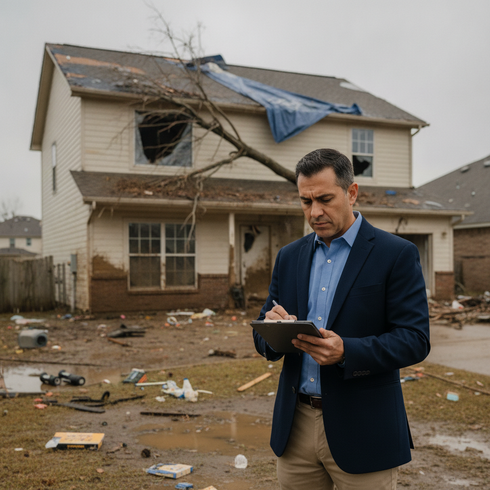
Mistakes in weather documentation have tangible consequences. For instance, a 2024 Insurance Institute study found that weather data discrepancies delayed 17% of major property claims, while errors in storm path documentation led to significant underpayments in several flood insurance cases. Such outcomes reveal the direct connection between data quality and claim satisfaction.
What best practices help prevent insurance weather errors?
Effective prevention of insurance weather errors involves a combination of technology, policy, and expert review processes. Leading insurers employ real-time data integration with platforms like RMS, periodic training for adjusters, and internal audit protocols focused on weather-driven scenarios. These steps help reduce avoidable discrepancies and facilitate fair claim outcomes.
How can professionals respond to disputed weather-based claims?
Disputes over weather-based insurance claims require a documented approach involving expert review and validation of meteorological data. According to a 2023 industry white paper, collaboration with expert witnesses and strict audit standards has become the industry norm in resolving complex disputes. When insurance weather errors result in disputed claims, engaging a qualified meteorology expert witness can provide vital clarity and defensible analysis for both policyholders and insurers. Detailed documentation, transparent communication, and impartial analysis help ensure equitable resolutions.
Step-by-step guide to addressing insurance weather errors
Addressing weather data discrepancies in insurance claims benefits from a structured response. The following checklist summarizes effective steps:
- Review all relevant weather source data for inconsistencies
- Consult recognized meteorology platforms or archives
- Document each stage of claim evaluation for audit purposes
- Engage an independent expert witness as appropriate
Comparative Analysis of Weather Data Sources and Methods
Selecting the right weather data tools and methods is central for robust insurance decision-making. This section contrasts leading solutions and highlights critical features that affect accuracy and reliability.
How do leading weather data tools for insurance compare?
Weather Underground and RMS are widely trusted platforms, each with distinctive strengths. Weather Underground offers granular real-time coverage and a vast user-driven network. RMS excels through analytical risk modeling, integrating historical event databases for decision support. Advanced tools feature automated data integrity checks and regular platform updates.
What factors should insurers evaluate when choosing a data source?
Accurate insurance assessments depend on tools providing timely updates, extensive coverage, and multiple independent validations. Decision-makers must weigh local versus global data, regularity of updates, and proven data security measures. Third-party certification and peer review ensure continued relevance and reliability of chosen systems.
Comparison table: strengths and weaknesses of top weather data sources
| Data Source | Strengths | Weaknesses |
|---|---|---|
| Weather Underground | Broad coverage, real-time updates, user input | Potential local variability |
| RMS | Integrates deep event databases, strong modeling | Higher technical bar, cost factors |
| Insurer Proprietary | Tailored for workflow, customized reporting | Limited external validation |
| Public Meteorology | Free access, regulatory compliance | Less granular data, slow updates |
Conclusion
Insurance weather error creates material risk for both insurers and policyholders, threatening claim accuracy and timing. Proactive error detection, best-in-class analytics, and expert validation reduce the likelihood and consequences of mistakes. Capital Expert Services offers essential expertise for anyone facing insurance weather error challenges.
Frequently Asked Questions
What policies are most affected by insurance weather error?
Property, agriculture, and auto insurance products are most exposed to weather error. These rely on detailed event records during storms, hail, or flooding to trigger and evaluate claims.
Can policyholders dispute claim decisions based on weather data?
Policyholders may request data reviews or seek independent experts to challenge claim adjustments made due to questionable weather reports. Insurers support these reviews through established audit and appeals processes.
Are there industry standards for weather data sources in insurance?
No single global standard exists. Most insurers rely on certified platforms, regulatory guidance, and rigorous internal auditing to maintain accurate weather-based claim evaluation.
How can insurers keep up with improvements in weather analytics?
Periodic reviews of market-leading tools, active collaboration with data providers, and ongoing staff training ensure adoption of advances in weather analytics. Attendance at industry workshops and forums accelerates the learning curve.
When is it appropriate to consult an expert witness for weather-related insurance claims?
Engaging an expert witness is recommended for high-stakes or complex cases where meteorological differences materially impact claim outcomes. Larger losses or contested facts often call for formal, independent expert analysis.
Accurate weather data is crucial for timely, fair insurance claims, with common errors arising from faulty input, misinterpretation, or process gaps. Leading insurers use advanced platforms and expert support to minimize dispute risk and enhance reliability. Adopting clear validation steps strengthens outcomes for both providers and clients. Capital Expert Services delivers proven guidance for managing insurance weather error in modern claims environments.