

Forensic document examination addresses challenges involving questioned signatures and disputed documents, requiring certified experts to apply unbiased scientific analysis. Many providers highlight credentials and expert witness roles to build trust, especially for legal professionals and businesses dealing with high-stakes document verification.
This article explains the scope of forensic document examination and guides readers on qualifications, methodologies, and practical steps for selecting reliable expert services. Capital Expert Services connects clients with leading professionals for signature authentication, handwriting analysis, and litigation support.
Key Takeaways
- Forensic document examiners assess signature authenticity for legal and business cases.
- Their work differs from graphologists, prioritizing proof over personality insight.
- Technologies like VSC and Photoshop are used in document and ink analysis.
- Certification and court testimony experience are vital when selecting an expert.
- Signature expert analysis supports case resolution in fraud, wills, and contracts.
Forensic Document Examination: The Role and Process
Forensic document examination is a blend of science and legal investigation, offering clarity in complex disputes and providing evidence that stands up in court. In this section, you’ll learn about the role of the signature expert, differences from other professions, the signature analysis process, and core services available to support critical cases.
What does a forensic document examiner do?
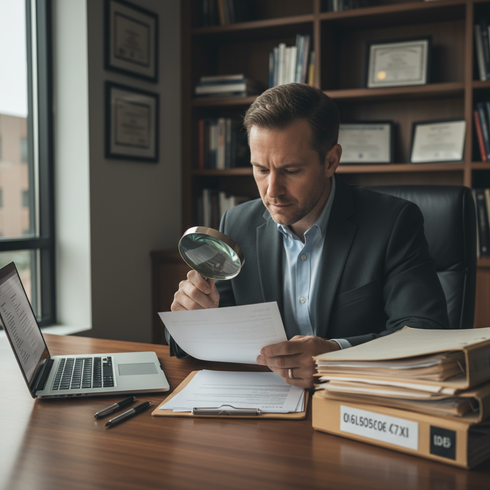
A forensic document examiner analyzes signatures, handwriting, and documents to assess their authenticity and source. Core responsibilities include scrutinizing disputed documents for evidence of forgery, determining authorship, and evaluating document alterations. If you’re interested in learning even more about the broader field and additional specialties, including how forgery experts contribute to casework, see our related resources. Those seeking insights into training, core methodologies, and the variety of services can find further details in our guide to the document examiner profession.
How is forensic document examination different from graphology?
Forensic document examination and graphology are often confused but serve distinct purposes. Forensic document examiners aim to verify authenticity by following legal standards and scientific procedures, focusing on facts that are admissible in court. In contrast, graphologists interpret handwriting to infer personality traits and are not typically recognized in legal contexts due to their subjective methodology.
What is the typical process for forensic signature analysis?
Signature experts use structured procedures and specialized technologies to ensure reliable results. The analysis often involves initial visual comparison, microscopic examination of ink flow and line quality, and spectral imaging to detect alterations. Tools such as the Video Spectral Comparator (VSC) and Adobe Photoshop help reveal subtle differences and document history that are not visible to the naked eye.
Key forensic document examination services
A wide array of services ensures that signature experts can address unique client requirements and complex legal challenges.
- Handwriting comparison and identification
- Signature authentication and verification
- Analysis of document dating, alterations, and obliterations
- Ink and paper analysis with advanced imaging tools, including VSC and Photoshop
According to a 2023 American Academy of Forensic Sciences publication, consistent adherence to analytical standards is essential to document authentication in legal environments.
Qualifications and Recognition of Signature Experts
Careful vetting of credentials and affiliations is crucial for selecting an effective signature expert, especially when testimony may influence high-value legal outcomes. Here you will discover the training, certification, and career landscape for professionals in this specialized field.
What qualifications are needed for forensic document examination?
A legitimate forensic document examiner typically holds a university degree in forensic science or a related discipline, has completed formal apprenticeship training, and maintains certifications from recognized organizations. Continuing education, proficiency testing, and courtroom experience are indicators of a reputable expert.
How do professional organizations support forensic document examiners?
Professional bodies such as the American Society of Questioned Document Examiners and the American Board of Forensic Document Examiners set best-practice standards, offer professional development, and maintain certification programs that promote skill advancement and credibility in court. These organizations also facilitate research and peer collaboration, raising industry standards across the sector.
What does the career outlook and salary range look like in this field?
Those entering the field can expect a competitive salary and a structured career progression. According to a 2024 survey by the National Forensic Career Institute, median salaries for certified forensic document examiners in the United States range from $60,000 to $120,000, depending on location, expertise, and frequency of courtroom testimony.
Why Legal Teams and Businesses Rely on Signature Experts
Signature experts serve as vital resources for legal teams and businesses, supporting document validation, dispute resolution, and expert testimony that can affect the trajectory of complex litigation. The following sections outline the practical roles and steps involved in engaging these professionals.
How can a forensic handwriting expert help in legal cases?
Legal teams and businesses rely on forensic handwriting experts to clarify disputed signatures and documents. Common scenarios include challenges to wills and contracts, fraud allegations, and verification in financial or insurance matters. Testimony from a signature expert helps ensure that conclusions meet legal standards and withstand cross-examination.

What is the process for evidence submission and working with experts?
Effective collaboration with a forensic document examiner begins with proper evidence submission and adherence to chain-of-custody protocols. Legal teams should prepare original or best-quality copies of disputed documents and provide relevant background details to support a structured review. Maintaining document integrity and following the examiner’s guidelines is paramount for reliable results.
Types of cases handled and areas of expertise
Signature experts are commonly engaged in a broad spectrum of cases requiring independent document analysis and expert opinion.
- Civil litigation involving fraud, forgery, and contract disputes
- Probate, estate issues, and trust authentication
- Banking, loan, and financial record verification
- Insurance document review and claim investigations
According to a 2024 National Forensic Center white paper, expert witness testimony from forensic document examiners often proves decisive in resolving high-value legal disputes.
Conclusion
Signature experts provide critical support in legal and business contexts through rigorous document analysis and qualified expert testimony. Their objective findings and methodological clarity ensure that disputed signatures are resolved according to established legal and scientific standards. Capital Expert Services offers trusted consultation in this highly specialized field.
Frequently Asked Questions
How do signature experts differ from other handwriting professionals?
Signature experts focus on scientific validation and legal standards, differentiating themselves from other handwriting professionals such as graphologists. Graphologists analyze handwriting for personality assessment, which does not meet the evidentiary requirements of the legal system.
What tools are commonly used in forensic document examination?
Tools central to forensic document examination include microscopes, spectral imaging devices, and digital platforms like Adobe Photoshop. These technologies allow experts to analyze fine handwriting details, ink composition, and potential document alterations missed during visual inspection.
How do I choose a reliable forensic document examiner?
Select a forensic document examiner with recognized certifications, documented experience in courtroom testimony, and a thorough understanding of scientific examination procedures. Professional association membership further indicates a commitment to field standards and ongoing education.
Can forensic handwriting analysis always prove forgery?
Forensic handwriting analysis is a powerful tool for detecting forgery but is sometimes limited by poor-quality or insufficient evidence. While many cases yield strong conclusions, some remain inconclusive if the examiner cannot establish definitive results.
What is the first step to submit a disputed signature for analysis?
Begin by contacting a qualified forensic document examiner, gathering original or high-quality document samples, and following the expert’s evidence-handling protocols. This method ensures a transparent process and supports reliable findings for legal or business use.
Signature experts use proven scientific techniques and industry-accredited tools to evaluate signatures and resolve document authenticity disputes. The qualifications, methodology, and courtroom experience of these professionals make their findings highly valuable for legal and business decisions. Capital Expert Services connects clients with recognized experts for dependable support in forensic signature analysis.